
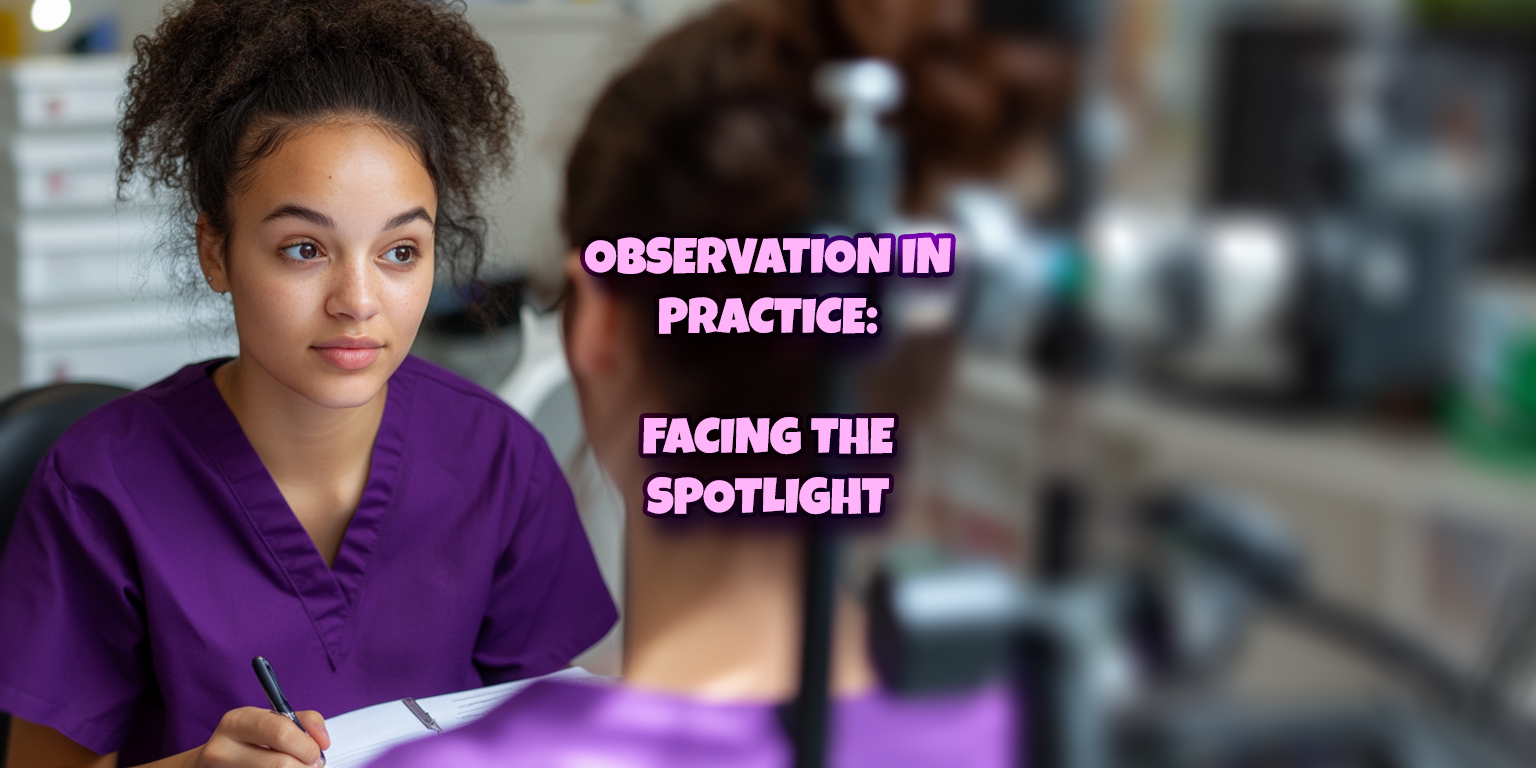
Having someone watch you work can be pretty nerve-wracking. Back in my first year in clinics, I felt a mix of excitement and dread. The practical tests were challenging enough on their own. Add an experienced optometrist observing my every move, and the pressure doubled. My hands shook, and my voice quivered. But I pushed through it. Despite finding out that I was passing, the most helpful part of having observation in practice was the feedback I received afterward. My optometrist supervisor told me what I did well and where I could improve. Hearing that boosted my confidence and gave me clear steps to get better.
Being observed doesn’t have to be a frightening experience. It can actually be a chance to learn and grow. I’d like to share some thoughts on how to handle these moments and even make them work in your favour.
Turning Nerves into Confidence
Being observed might feel intimidating, but there are simple ways to stay calm. First, remember that the person watching is there to help you, not just judge. They’re looking for the good as well as areas for improvement.
During my own experiences, I found a few tricks to steady my nerves. One effective method was deep breathing. Before starting a task, I’d take a moment to breathe slowly and deeply. This helped me focus and calm down. Another strategy was to visualise success. Instead of worrying about making mistakes, I pictured myself performing the task smoothly.

It’s also helpful to practice with a peer. Getting used to someone observing you can make the actual observation less daunting. And remember, preparation is key. The more familiar you are with the task at hand, the more confident you’ll feel.
Observations aren’t just tests; they’re opportunities to grow and improve. Take them in stride, and you’ll find they’re not as scary as they seem.
The Bright Side of Being Observed
Having someone watch you work isn’t just about pointing out mistakes; it’s a chance to learn and grow. Observers can offer insights you might not catch on your own. Their feedback can highlight areas where you can improve and help you become more confident.
I recall a time during my third year when I was with my first real patient. After the session, my optometry supervisor told me I was too quiet and didn’t try to build rapport. I was mortified because I thought I’d connected well. Hearing that was tough, but it opened my eyes. I realised I needed to make a conscious effort to engage with patients. So I started focusing on building rapport, asking open-ended questions, and making sure they felt comfortable. Now, connecting with patients comes naturally to me.
Being observed helped me turn a weakness into a strength. Embracing the feedback made a real difference in how I interact with patients in my clinics. I now don’t even need to think in order to connect, which now makes my interactions feel much more natural.
Testing Fellow Professionals Confidently
Testing fellow optometrists can feel a bit daunting. I often worry that I’m being judged not just as a professional, but also through the eyes of a patient. It’s like facing double scrutiny, and that can make the whole experience feel strange.

But then I remind myself why they’re sitting in my chair. They’re here for their own eye health, and they’ve chosen me out of all the optometrists available. That trust is something to feel good about. It means they value my expertise.
One thing that helps is adjusting my language. Since they have the same background, I don’t need to break down complex terms. If I mention presbyopia, they know exactly what I mean. This makes the conversation flow more naturally, and we can focus on the examination itself without getting bogged down in explanations.
Testing a peer is also an opportunity to exchange ideas. They might offer insights or tips that I hadn’t considered. Instead of feeling like a test, it becomes a collaborative experience. Embracing this perspective turns the situation from stressful to rewarding.
From My Perspective as an Assessor
I believe in giving plenty of feedback. I don’t focus only on the mark scheme; I also look for ways you can improve and recognise what you do well. When someone puts in real effort, there’s always potential. Even if they don’t pass the exam, I see the promise in their work.
I’ve had to fail students who I know will become excellent optometrists. They just didn’t do enough on the day to meet the requirements. It’s tough, but necessary. I always try to be constructive, pointing out where they can grow. You can also read more about how exam setbacks can help you grow in this article I prepared last year.
It’s often clear when someone hasn’t prepared or isn’t willing to engage. Some may just scrape by, but their lack of effort shows in the feedback. Preparation and a willingness to learn make a big difference—not just in exams, but in becoming a capable professional.
As assessors, we’re not out to make you fail. We want you to be safe and competent in practice. We’re looking for reasons to award marks. Remember, we’re on your side!
A Friendly Wrap-Up
Feeling nervous on exam day is something we all experience. It’s normal, and we understand that. I’ve seen many people who usually appear confident—even a bit overconfident—find themselves struggling when the assessment begins.
Remember, observation in practice is not there to catch you out. We’re focused on ensuring you’re practicing safely and doing the job correctly. In nearly every case, the goal is to support you, not to hinder you. Often, your performance can improve significantly after these observations and the feedback you receive.
Try to view being observed as an opportunity to grow. Embracing the process can lead to unexpected boosts in your skills. We’re here to help you succeed.
If you’ve found this article useful, please share with other students, colleagues and professionals. If you’d like to be informed of the latest articles, subscribe to The Eye Care Advocate below!
Leave a Reply